
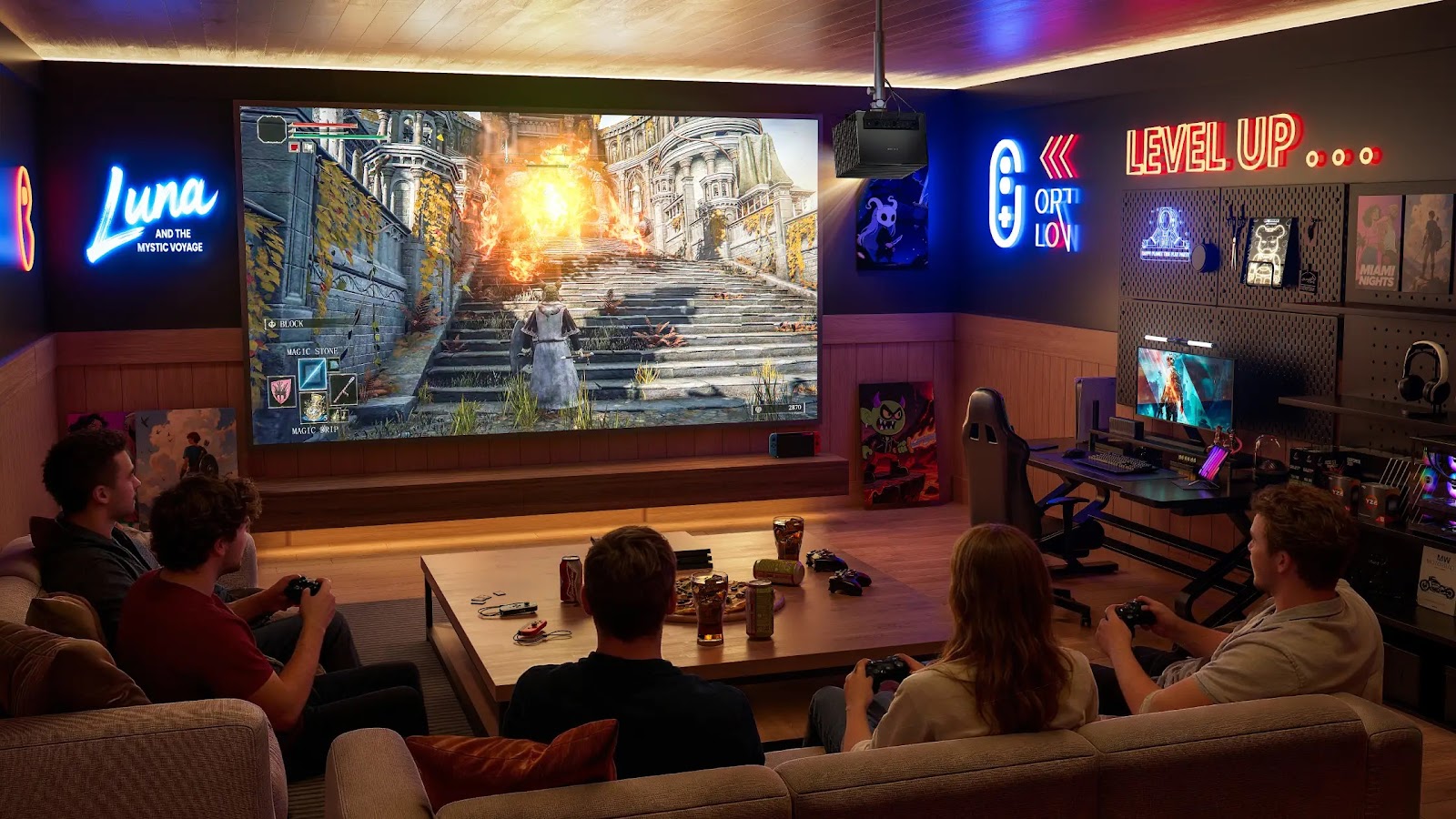
Remember the days of lugging extremely heavy glass-tube televisions to a friend’s basement for a weekend tournament? We all started somewhere. For years, competitive players were forced to huddle around tiny glowing monitors in dark bedrooms. You simply had to use small screens because older large-format displays were notoriously, painfully slow. You pressed a jump button, and a noticeable fraction of a second later, your on-screen character finally left the ground. That frustrating delay was an absolute death sentence in any serious multiplayer match. But technology rarely stands still for long. Modern hardware has completely shattered those outdated limitations. Stepping up to a massive projection surface no longer means sacrificing your competitive edge. It actually gives you a wildly distinct advantage over opponents who are still squinting at twenty-seven-inch panels.
Shattering Old Latency Myths
Input lag used to be the absolute bane of any dedicated player. Older machines processed image data so heavily that playing a fast-paced shooter felt exactly like trying to run underwater. That clunky history is entirely behind us now. Today’s dedicated hardware features highly specialized processing modes that bypass all the unnecessary cinematic filters. This drops the signal latency down to single-digit milliseconds.
When you flick your thumbstick or click your mouse, the action translates instantaneously onto your wall. Your brain barely has enough time to register the physical movement before your crosshairs snap to the target. This rapid-fire response time keeps you highly competitive in intense ranked lobbies. You get to maintain your edge while still enjoying a massive, awe-inspiring picture that fills your entire field of view.
Immersion That Offers a Tactical Edge
Scale matters a lot more than most people realize. Playing on a standard desktop monitor forces you to lean forward and squint at distant sniper glints or tiny background movements. Blow that exact same image up to one hundred and twenty inches. Suddenly, those tiny, easy-to-miss details are literally larger than life. You can spot an enemy player hiding in the shadows way before they even notice your presence on the map.
Your peripheral vision gets fully engaged when the screen is this large. It pulls you entirely into the digital world. Racing simulators feel like you are actually sitting inside the cockpit of a high-speed sports car. Open-world adventures feel like genuine exploration rather than just looking at a flat digital map. It feels significantly less like staring through a small, restrictive window and much more like stepping directly onto the actual battlefield.
Core Hardware Features to Target
You cannot just pick up any random lens off the shelf and expect it to handle the chaotic speed of modern video games. You have to look for specific hardware traits to get this setup right.
Refresh Rates and Fluidity
A high refresh rate is going to be your absolute best friend. A standard sixty-hertz image looks perfectly fine for slow-paced roleplaying adventures or simple puzzle games. But competitive arenas demand way more speed. Hitting one hundred and twenty or even two hundred and forty frames per second makes incredibly fast camera pans look completely smooth. Tracking a moving target across the map becomes effortless because the distracting motion blur essentially vanishes from the screen.
Striking a Balance With Resolution
Visual clarity is equally vital to your success. You want to identify texture details without any jagged pixelation ruining the view. Someone building a dedicated movie room might naturally seek out the best 4k home theater projector specifically for its cinematic color accuracy and deep contrast. Gamers, however, need that pristine high resolution paired directly with aggressive processing speed. Getting ultra-high-definition graphics running at blazing speeds gives you the absolute best of both worlds.
Brightness for Daytime Grinding
We do not always play in pitch-black rooms at two in the morning. Sometimes you want to jump into a quick match on a sunny Saturday afternoon. This means your hardware needs enough raw brightness to push through ambient room light. Machines with high lumen outputs keep the colors looking vibrant and punchy, ensuring that bright skies and dark corners remain perfectly visible no matter what time of day you decide to log on.
Elevating Your Entire Setup
Moving your battle station away from a traditional television setup frees up a ridiculous amount of physical space in your room. You are no longer tethered to a specific entertainment console jammed against one designated wall. Setting up a proper gaming projector transforms an empty, boring white wall into a highly dynamic digital canvas.
Here are a few ways this completely changes your everyday environment:
- Flexible placement lets you beam the image from a coffee table or mount the unit cleanly on the ceiling, totally out of sight.
- You eliminate the need for heavy, fragile glass screens that dominate the room even when they are turned off.
- The sheer size of the picture turns a solitary gaming session into a wildly fun social event whenever friends drop by for local co-op matches.
- Advanced laser light sources run exceptionally cool and quiet, so you never have to hear a distracting fan spinning up during a quiet, tense moment in your game.
Upgrading your primary gaming display is always a deeply personal choice. But once you actually experience a sprawling, latency-free picture that dominates your entire visual field, going back to a standard monitor feels downright claustrophobic. It completely rewrites how you experience your favorite digital worlds. You stop just playing the game and start actually feeling like you are inside of it.
read more : https://prayfulheart.com/