
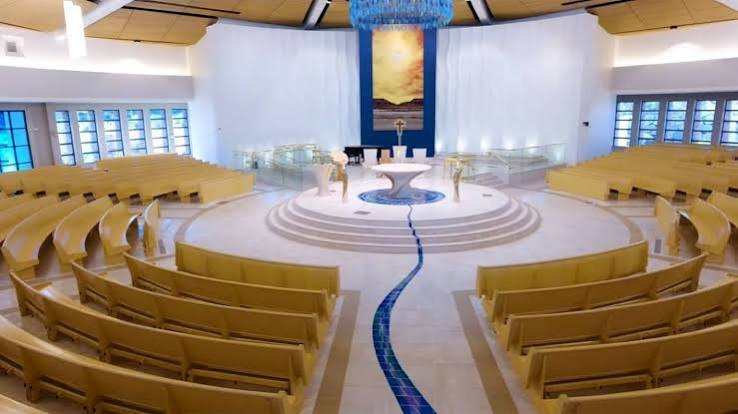
Walk into almost any sanctuary and you will feel something before you hear a single note of music or a word from the pulpit. The room itself communicates. The layout draws your eye forward. The seating tells you where to sit, how close to gather, and whether you are in a formal space or an informal one. Most people never consciously notice any of this. But it shapes their experience deeply.
That is the quiet power of church furniture. It is not just a practical necessity. It is an active part of how worship happens and how people connect with one another and with God.
If your congregation is working through a renovation, a new build, or simply asking why Sunday mornings feel a little disconnected, it is worth taking a serious look at what your physical environment is actually communicating.
The Space Speaks Before Anyone Does
Environmental psychologists have studied for decades how physical spaces influence human behavior and emotion. Churches and synagogues are not exempt from this dynamic. In fact, they may be more susceptible to it than most spaces because worship requires a particular kind of openness and presence that is easily disrupted by physical discomfort or poor sight lines.
When seating is uncomfortable, attention wanders. When rows are too far apart or angled poorly, the congregation feels fragmented. When furniture is worn, dated, or clearly neglected, it can communicate something unintended: that this community is not investing in the place where they gather.
On the other hand, when seating is arranged thoughtfully, when it supports the body and orients people naturally toward the chancel or bimah, when it fits the scale of the room, something shifts. People settle in. They lean forward. They stay present.
This is not abstract theory. Talk to any church administrator who has been through a full sanctuary renovation, and they will almost always mention that the congregation felt the difference immediately, not just in comfort, but in atmosphere.
Sight Lines Matter More Than Most People Realize
One of the most overlooked factors in seating design is sight lines. In a rectangular sanctuary with perfectly straight rows, this is relatively straightforward. But most sanctuaries are not perfectly rectangular. Many have fan-shaped or semicircular floor plans. Balconies. Asymmetrical layouts inherited from decades of building additions.
In spaces like these, seating arrangement directly affects whether people can see the altar, the pulpit, the reading table in a synagogue, the choir, or the communion table. When worshippers cannot clearly see what is happening at the front of the room, they disengage. It is not a reflection of weak faith or distraction. It is simply human.
Radius-curved pews are one of the most effective design solutions for this problem. Unlike straight pews forced into a curved or fan-shaped floor plan, radius pews are actually built to follow the arc of the room. Every seat in the row faces the focal point naturally. No one is craning their neck. No one is sitting at an angle that forces them to twist to see what is happening.
This is a design detail that sounds technical but has a very tangible effect on how connected people feel during a service.
Comfort Is a Ministry Issue
There is sometimes a reluctance in faith communities to prioritize comfort. It can feel self-indulgent, or at odds with the idea that worship should require some sacrifice of the self. This is an understandable instinct. But chronic physical discomfort does not produce a spirit of humble reverence. It produces distraction.
When someone is shifting constantly in their seat, rubbing their lower back, or counting down the minutes until they can stand, they are not worshipping. They are enduring.
Seating comfort involves several factors working together: the depth of the seat, the angle of the back, the density and quality of any upholstery, and the height of the seat from the floor. Upholstered pews, when designed and built well, distribute weight more evenly and reduce pressure on the back and legs during extended services. Longer liturgical services, common in Catholic, Episcopal, Lutheran, and Orthodox traditions, make this consideration especially important.
For synagogues, where Shabbat and High Holiday services can run two hours or more, seating comfort is equally significant. Benches or pews that support the body well allow worshippers to remain present and focused throughout the service.
This is not about luxury. It is about removing a barrier to participation.
Layout Shapes How Community Forms
Beyond the individual experience, seating layout influences how a congregation functions as a community. This is one of the reasons the shift from theater-style rows facing a stage has been so significant in recent decades. Congregations increasingly want to feel gathered, not just assembled.
Curved and semicircular seating arrangements are one way to accomplish this. When rows curve around the chancel or around a central focal point, worshippers can see not just the front of the room but also one another. This peripheral awareness of other people, of a shared experience, contributes to a sense of communal worship rather than a collection of individuals sitting in the same room.
This is theologically significant for many traditions. Worship is not a private act. It is something done together. The physical arrangement of the space either reinforces that or works against it.
Aisle placement, row spacing, and the distance between the final row and the chancel all play into this dynamic. So does the placement of accessible seating for wheelchair users. When wheelchair spaces are integrated naturally into the seating plan rather than isolated along a side wall, every member of the congregation is part of the gathered community, which is exactly what inclusive design should accomplish.
What Worn or Outdated Furniture Communicates
A congregation communicates its values through many things: its programs, its preaching, its community presence, its hospitality. The physical condition of its sanctuary is one of those signals, whether the community intends it to be or not.
Worn pew finishes, split or stained upholstery, wobbly kneelers, and mismatched seating left over from various renovation eras send a message to first-time visitors and long-time members alike. That message is rarely intentional. But it lands.
Investing in the physical environment of a sanctuary is, in part, an act of welcome. It communicates that this community takes seriously the space where it gathers. That the people who walk through the doors, whether they are lifelong members or visiting for the first time, are worth the investment.
This does not mean a congregation needs to spend extravagantly. It means being intentional. A thoughtful renovation that addresses sight lines, comfort, and accessibility does not have to be comprehensive all at once. Many congregations approach these projects in phases, prioritizing the changes that will have the greatest impact on the worship experience.
Practical Questions Worth Asking
If you are a pastor, facilities director, building committee member, or administrator starting to think about seating, here are a few questions worth working through before any planning conversation:
Where do sight lines break down in your current layout? Walk every section of your sanctuary and notice where the view of the chancel or bimah is blocked or angled awkwardly. These are the problem areas to solve for.
How long are your typical services, and what does that demand from your seating? A 45-minute contemporary service and a two-hour High Holiday service have different comfort requirements. Be honest about your context.
Who in your congregation struggles most with the current seating? Older members, individuals with mobility challenges, families with young children, and newcomers who are not yet comfortable often feel the friction of a poorly arranged worship space more acutely than others.
What does your current furniture communicate about your community? This is a harder question, but an honest one. Ask a few people who have visited for the first time what impression the space made.
What is your renovation horizon? Even if a full project is not possible now, knowing your timeline helps you make intentional interim decisions rather than reactive ones.
The Environment Is Part of the Message
There is a phrase many worship leaders use: the medium is the message. The space itself preaches something. The arrangement of seating, the quality of the furniture, the sight lines, the accessibility, all of it participates in the act of worship.
That is not an argument for making sanctuaries elaborate or expensive. It is an argument for making them intentional. For choosing furniture and layout that serves the people who gather there, that removes barriers to presence and participation, and that honors the purpose of the space.
Good design in a sanctuary does not call attention to itself. It simply gets out of the way and lets worship happen.
New Holland Church Furniture has been crafting custom worship seating and sanctuary furnishings since 1950. As the nation’s leading manufacturer of radius-curved pews, the team brings design expertise, project coordination, and old-world craftsmanship to churches and synagogues across the United States.